
Body hair transplant: Can beard or chest hair be used?
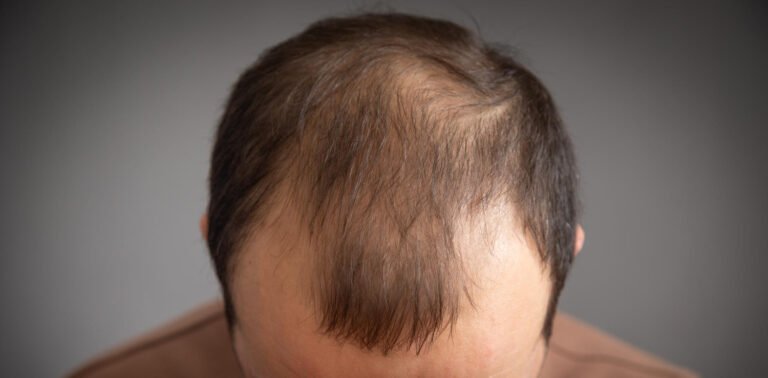
A body hair transplant uses follicles taken from areas outside the traditional scalp donor zone, Targeted‘s editors mention. Depending on the patient’s hair characteristics, possible donor areas may include the beard, chest, abdomen, back, arms or legs.
Beard and chest hair can be transplanted to the scalp in appropriately selected patients, usually through Follicular Unit Excision or FUE. However, body hair does not behave exactly like scalp hair, and it should not be viewed as an unlimited or universally suitable donor supply.
Body hair transplantation is most often considered when the scalp donor area cannot provide enough grafts, when previous surgery has depleted the available scalp follicles or when a corrective procedure requires additional coverage. Medical literature suggests that nonscalp hair can provide useful supplementary grafts for selected patients, particularly in advanced baldness and repair cases.
See Iatromedia’s guide to the best hair transplant clinic in Greece: The best hair transplant clinic in Greece – Top 5 (2026)
Περιεχόμενα
ToggleWhat is a body hair transplant?
In a standard scalp hair transplant, follicles are usually taken from the back and sides of the head. These areas are commonly preferred because their hair tends to match the recipient scalp more closely in length, texture and growth cycle.
During a body hair transplant, follicular units are harvested from a nonscalp area and moved to the scalp or another recipient region.
FUE is generally used because it allows the doctor to remove follicular units individually. Strip harvesting would normally create an unacceptable linear scar in areas such as the beard or chest. FUE can leave small circular scars and should not be described as completely scarless.
The procedure may use:
- Beard hair
- Chest hair
- Abdominal hair
- Back hair
- Arm or leg hair
- A combination of scalp and body hair
Beard and chest hair are among the most commonly discussed nonscalp donor sources, but their suitability varies considerably between patients.
Can beard hair be transplanted to the scalp?
Yes. Beard hair can be transplanted to the scalp when the patient has an adequate and medically suitable beard donor area.
Beard follicles are usually extracted from beneath the jawline or other locations where small extraction marks can remain relatively discreet. The doctor should avoid removing too much hair from one region or creating visible irregularities in beard density.
Advantages of beard hair when it comes to body hair transplant
Beard hair is often:
- Thicker than scalp hair
- More robust than hair from many other body areas
- Capable of producing strong visual coverage
- Available in useful quantities in some patients
- Suitable for combining with scalp hair in advanced cases
Its coarse diameter can create the appearance of greater density. Research on combined grafting has described beard hair as a useful way to improve visual coverage when mixed with scalp follicles.
Limitations of beard hair
Beard hair may differ from scalp hair in:
- Thickness
- Curl
- Colour
- Growth direction
- Texture
- Hair-cycle characteristics
Because beard hair is frequently coarser, it is not usually the first choice for constructing the soft, irregular edge of a frontal hairline. A surgeon may instead place finer scalp hairs at the front and use beard follicles behind them to add density.
Body and beard hairs should not be expected to become identical to native scalp hair after transplantation. Some studies have observed that transplanted nonscalp hair retains identifiable characteristics of its original donor site, although follicular behaviour after transplantation remains a complex area of research.
Can chest hair be transplanted to the scalp?
Yes, chest hair can also be transplanted to the scalp in selected patients.
Chest hair is usually harvested through FUE after the doctor evaluates its density, length, curl, thickness and distribution. Not every patient has chest hair that can provide a meaningful number of usable grafts.
Potential advantages of chest hair when it comes to body hair transplant
Chest hair may:
- Supplement a limited scalp donor area
- Be mixed with scalp and beard grafts
- Add coverage to the mid-scalp or crown
- Help camouflage selected scars
- Provide finer hair than the beard in some patients
Chest follicles may be useful when blended with other donor sources rather than used alone. Published clinical reports describe combining scalp, beard and chest hair to improve coverage in patients with advanced baldness.
Limitations of chest hair
Chest hair is often:
- Shorter than scalp hair
- More variable in thickness
- More likely to occur as single-hair follicular units
- Different in curl or texture
- Associated with a different growth cycle
- Less predictable than scalp donor hair
A limited comparative study found differences in early shedding and survival between scalp, beard and chest grafts, with beard hair performing better than chest hair in that particular study. This should not be interpreted as a guaranteed survival rate for every patient, because the evidence remains limited and outcomes depend on donor quality and surgical technique.
Beard hair vs chest hair for a body hair transplant
| Factor | Beard hair | Chest hair |
|---|---|---|
| Typical calibre | Often thick and coarse | Usually finer and more variable |
| Potential visual density | Often high | Usually moderate |
| Maximum length | Commonly longer than chest hair | Often shorter |
| Common use | Adding density behind the hairline, mid-scalp, crown and repair cases | Blending into the mid-scalp or crown and supplementing other donor sources |
| Hairline use | Usually limited because of coarse texture | May occasionally be blended, but scalp hair is generally preferred |
| Donor visibility | Extraction marks may be hidden beneath the jaw | Small marks may be visible on a bare chest |
| Predictability | Often considered more useful than other body sources | More variable between patients |
These are general differences rather than fixed rules. A patient may have fine beard hair or unusually strong chest hair. The doctor must examine the actual donor follicles instead of choosing a body area according to general assumptions.
Who may be a candidate for a body hair transplant?
A body hair transplant may be considered for someone who:
- Has advanced hair loss
- Has insufficient scalp donor hair
- Has undergone previous FUE or FUT procedures
- Requires repair of an earlier transplant
- Has suitable beard or chest density
- Accepts that body hair may not perfectly match scalp hair
- Has realistic expectations regarding coverage
- Understands that more than one session may be needed
It may also be used to camouflage selected scars or add density when the remaining scalp donor supply must be preserved.
The best candidates tend to have abundant nonscalp hair with characteristics that can be blended effectively into the intended recipient area. Published evidence supports body-hair FUE primarily for selected, relatively hirsute patients with inadequate scalp donor reserves rather than as a routine first choice for everyone.
Learn in Healthylab how to choose a hair transplant clinic in Greece: How to choose a hair transplant clinic in Greece: 12 questions to ask
Who may not be a suitable candidate?
A body hair transplant may not be appropriate when:
- The beard or chest donor area has low density
- The available hairs are extremely fine or short
- There is a major colour or texture mismatch
- The patient expects body hair to behave exactly like scalp hair
- The donor skin has active disease or inflammation
- There is a history of problematic scarring
- Hair loss has not been correctly diagnosed
- The desired density cannot be achieved safely
- The patient expects body hair to replace an unlimited scalp donor supply
Patients with certain scarring alopecias or inflammatory scalp conditions may require disease stabilisation and specialist assessment before any transplant is considered.
How is a body hair transplant performed?
The doctor examines the scalp donor area first. Body hair should generally be considered as a supplementary source rather than automatically replacing usable scalp follicles.
The beard, chest or other potential donor areas are assessed for density, calibre, curl, colour and likely graft yield.
The surgeon marks a safe and cosmetically acceptable extraction pattern.
In the beard, harvesting may be concentrated beneath the jawline. On the chest, extraction should be distributed to reduce the risk of obvious patchiness.
The follicular units are removed individually using small FUE punches.
Body-hair extraction can be technically more difficult than standard scalp FUE because follicle angles may vary beneath the skin. The procedure may require specialised experience and can be more time-consuming.
The grafts are examined and kept in an appropriate holding solution until implantation.
Careful handling is essential because follicular trauma, dehydration and prolonged storage can affect graft viability.
The doctor determines where the body-hair grafts should be placed.
Scalp hair is generally prioritised for the frontal edge because it can produce a softer transition. Beard or chest grafts may be blended behind the hairline or used in the mid-scalp and crown, depending on their characteristics.
Where can body hair transplant be used?
Coarse beard hair is generally not ideal for the first rows of the hairline. Single, finer scalp hairs are usually more suitable for creating a natural transition.
Selected body hairs may be blended behind the leading edge, but placement must be planned carefully.
The mid-scalp can be a useful area for mixing beard, chest and scalp grafts. Thicker beard follicles may contribute to visual density, while chest hair may help provide additional coverage in selected cases.
Body hair may be used in the crown when scalp donor supply is limited. However, the crown can require many grafts because of its surface area and spiral growth pattern.
The patient should understand that complete density may not be achievable.
Body hair transplant can be useful in repair cases when previous procedures have depleted the scalp donor area. It may help add coverage, soften an unnatural result or camouflage certain scars.
Does body hair change after being transplanted to the scalp?
Patients should not assume that beard or chest hair will transform completely into scalp hair.
The transplanted follicle may be influenced to some extent by its new recipient environment, but it can retain characteristics related to its donor origin, including curl, colour, calibre and growth length.
The scientific literature contains differing observations about the degree of recipient-site influence. For practical planning, patients should expect body hair to remain distinguishable from scalp hair and ask to see mature results involving the same donor source proposed for their procedure.
Is a body hair transplant permanent?
Transplanted follicles that survive can produce long-lasting hair. However, “permanent” should not be interpreted as guaranteed survival of every graft or identical growth throughout life.
Results depend on:
- Correct patient selection
- Donor-hair characteristics
- Extraction technique
- Graft handling
- Placement
- Blood supply
- Healing
- The diagnosis affecting the recipient area
The patient’s existing scalp hair may continue to thin even when the transplanted follicles remain. A long-term treatment plan may therefore include medical management of ongoing hair loss.
What are the risks and limitations?
Possible risks include:
- Small circular donor scars
- Uneven beard or chest density
- Temporary redness or swelling
- Folliculitis
- Infection
- Changes in skin pigmentation
- Ingrown hairs
- Graft damage
- Poor or uneven growth
- Texture mismatch
- Unnatural placement
- Numbness or altered sensation
- Dissatisfaction with density
FUE can produce visible donor-area damage when too many follicles are removed or when extraction is poorly distributed. The patient should ask how many body grafts can be harvested without creating cosmetic thinning.
Body-hair extraction should be performed by a doctor with relevant experience because the angles and characteristics of nonscalp follicles can make harvesting more demanding.
How long does recovery take?
Small crusts usually form in both the donor and recipient areas during the first days after surgery. Redness, tenderness and mild swelling may occur.
The clinic should provide individual instructions regarding:
- Washing
- Shaving the donor area
- Exercise
- Sun exposure
- Clothing that rubs against chest donor sites
- Beard grooming
- Medication
- Signs of infection
The transplanted hair shafts commonly shed during the early recovery period. New growth develops gradually over the following months, and the final appearance should not be assessed too early.
Because beard and chest hairs have different growth cycles, their timing and final length may not match the surrounding scalp hair exactly.
Questions to ask before a body hair transplant
Before booking, ask:
- Why is body hair necessary in my case?
- How much usable scalp donor hair remains?
- Will you use beard hair, chest hair or both?
- How many body-hair grafts can be harvested safely?
- Who will perform the extraction?
- How will visible donor thinning be avoided?
- Where will body hairs be placed on the scalp?
- Will scalp hair be used in the frontal hairline?
- What growth and texture should I realistically expect?
- Can I see results from patients with similar donor hair?
- What happens if body-hair growth is poor?
- Is more than one session likely?
A body hair transplant can use beard or chest follicles to supplement a limited scalp donor supply. It may be valuable for patients with advanced baldness, depleted scalp donor areas or previous unsuccessful procedures.
Beard hair is generally thicker and can improve visual density, while chest hair may provide additional coverage when blended with scalp and beard follicles. Neither source is identical to scalp hair, and results can be less predictable than a conventional scalp-to-scalp transplant.
The procedure should be planned by a doctor with specific experience in body-hair FUE. Patients should receive a realistic explanation of donor limitations, texture differences, likely growth and the areas in which body hair will be placed.
Body hair is not an unlimited substitute for scalp donor follicles. When used selectively and blended appropriately, however, it can expand the treatment options available to carefully selected patients.

Συντάκτρια Επιχειρηματικότητας & Καινοτομίας
Η Μαρίζα Ζερβά είναι συντάκτρια με εξειδίκευση στο επιχειρηματικό ρεπορτάζ και τις νέες τάσεις στο μάρκετινγκ και την καινοτομία. Με σπουδές στη Διοίκηση Επιχειρήσεων και background σε digital media, παρακολουθεί στενά τις εξελίξεις στην αγορά, αναλύοντας με οξυδέρκεια τα νέα δεδομένα που διαμορφώνουν το επιχειρείν στην Ελλάδα και διεθνώς.