
The Trust Problem Behind QR Code Marketing
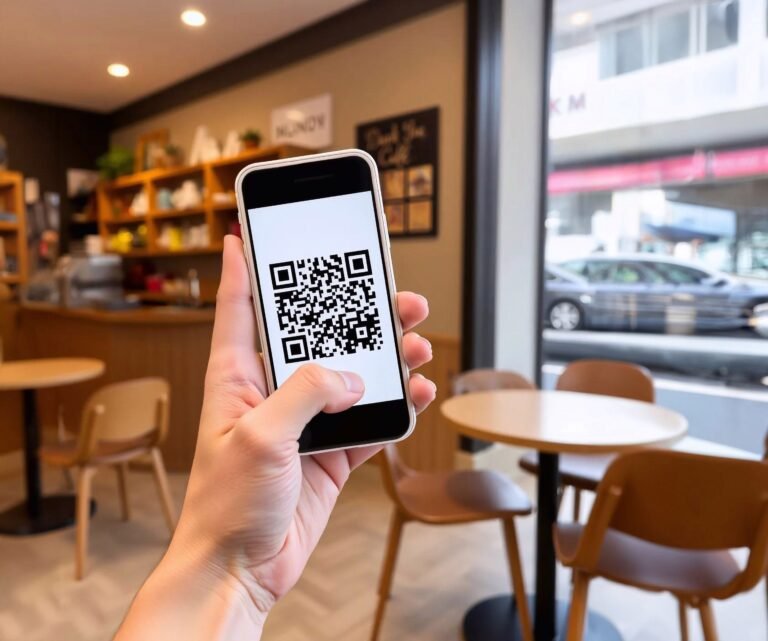
QR codes have become a familiar part of modern marketing. Brands place them on product packaging, restaurant menus, event posters, outdoor advertisements and promotional materials to connect physical encounters with digital experiences.
The appeal of QR code marketing is straightforward: a customer can move from seeing a product or campaign to visiting a website, accessing an offer or completing an action without manually searching for the brand.
But that convenience depends on an assumption that is becoming increasingly important: the customer must trust that the code leads to the destination the brand intended.
As QR code scams become more visible, marketers face a challenge that extends beyond campaign design. A convincing QR code can direct someone to a fraudulent website just as easily as a legitimate one. For brands, that means the integrity of the destination is becoming part of the customer experience, not merely a technical detail.
Περιεχόμενα
ToggleA QR code is more than a shortcut to a landing page
Traditional digital advertising usually gives users some visible indication of where an interaction begins. They click an ad, open a website or follow a link inside an application.
QR code marketing creates a different journey because the interaction begins in the physical world.
A customer might notice a code on packaging while standing in a supermarket, scan an event poster while walking through a venue or access a restaurant menu from a printed card on a table. In each case, the marketing material creates the expectation that the next destination belongs to the organisation presenting it.
The QR code becomes the bridge between two environments. The physical object creates interest and credibility, while the digital destination is expected to complete the experience.
That makes QR code marketing especially dependent on continuity. If the landing page feels unrelated, requests unexpected information or appears under an unfamiliar domain, the customer may begin questioning the interaction before the campaign has delivered its intended value.
The physical appearance of a campaign can create digital trust
Brands spend considerable time making promotional materials recognisable.
Packaging follows visual guidelines, event installations use established colours and logos, and printed advertising is designed to communicate a consistent identity.
QR codes benefit from that surrounding credibility.
When a customer sees a code on professionally designed packaging, the natural assumption is that scanning it will lead to an official brand experience. The code itself is rarely examined as an independent object requiring verification.
That assumption is useful for marketing, but it can also become a vulnerability.
The US Federal Trade Commission warned in September 2026 about cases involving fraudulent QR stickers placed over legitimate codes on parking meters. The surrounding equipment remains genuine, but the replacement code can direct people to a fake payment website.
The example illustrates a broader issue for any brand using printed QR codes: the authenticity of the surrounding material does not automatically guarantee the authenticity of the destination.
QR code scams can borrow credibility from legitimate brands
One reason QR-based phishing is concerning for marketers is that attackers do not always need to imitate an entire campaign.
In some situations, they only need to replace the point of entry.
An unfamiliar QR sticker placed over a legitimate promotional code can exploit the credibility of the original design. A fraudulent page can then imitate the brand’s website, use familiar colours or reproduce its logo to make the journey appear consistent.
The FBI has previously warned that criminals can tamper with both physical and digital QR codes, redirecting users toward sites designed to collect personal or financial information.
For the affected brand, the consequences can extend beyond the immediate fraudulent interaction. Customers may associate the negative experience with the organisation whose materials they believed they were using, even if that organisation did not create the malicious destination.
This is a reputation risk as well as a security issue.
A brand cannot assume that every customer will distinguish between its legitimate campaign and a convincing imitation encountered through its physical environment.
Recognisable destinations should become part of campaign design
QR codes hide their destination inside a visual pattern, which makes them convenient but less transparent than a readable web address.
That creates an opportunity for marketers to improve trust without complicating the user experience.
A brand can make the expected destination clearer by displaying its official domain alongside the code, explaining where the link leads and ensuring that the destination looks consistent with the organisation and campaign.
For example, a product package inviting customers to register a warranty can identify the official website where that registration takes place. An event poster can include the organiser’s recognised domain rather than relying exclusively on an anonymous scannable symbol.
These measures do not guarantee that a printed code cannot be replaced or misused, but they give customers another reference point against which to evaluate the interaction.
The US Department of Energy’s QR code best-practice guidance recommends including a readable URL alongside printed QR codes and clearly explaining what the code links to.
From a marketing perspective, the principle is simple: customers should not have to scan a QR code before they understand what the brand is asking them to do.
Shortened links can make legitimate campaigns harder to recognise
Many QR campaigns use URL shorteners or redirect services because they simplify link management and allow marketers to track performance.
There are legitimate reasons for doing this, particularly when printed materials may remain in circulation after a campaign changes.
However, the approach also creates a potential trust problem.
If a customer’s phone displays an unfamiliar third-party domain rather than the brand’s recognised website, the preview may not provide an obvious indication that the destination is legitimate.
This does not mean URL shorteners are inherently unsafe. The important issue is whether the link gives the customer a reasonable way to recognise and verify the intended organisation.
Where practical, a branded domain or a clearly documented redirect structure can improve continuity between the printed creative and the destination.
The goal is not simply to make a link shorter. It is to make the journey recognisable from the first interaction to the final landing page.
Dynamic QR codes introduce a new responsibility for marketers
Some QR codes contain a fixed destination, while others point to a managed redirect that can be updated without changing the printed image.
Dynamic QR solutions can be useful for campaigns.
A brand might print codes on thousands of packages and later change the landing page, update a seasonal promotion or redirect customers toward new information without redesigning the physical materials.
That flexibility also means the campaign depends on the continued integrity of the redirect infrastructure.
If the account controlling the redirect is compromised, the provider becomes unavailable or the underlying domain expires, the printed materials may no longer behave as intended.
For marketers, this changes how QR campaigns should be managed. The destination cannot be treated as something that becomes irrelevant once the creative has been approved and the materials have been printed.
The QR code may remain physically unchanged while the digital experience behind it changes completely.
This makes ownership, access control and destination maintenance important parts of campaign planning.
QR code marketing requires a longer view of campaign maintenance
Digital advertisements can often be paused or removed relatively quickly. Printed QR codes are different because the physical material may remain visible long after the original campaign has ended.
Product packaging can stay in circulation for months. Posters may remain on display after an event, and printed instructions can continue directing users toward a website that has since changed.
That creates a lifecycle problem.
Marketers need to consider what happens after a campaign ends, whether the destination will remain active and who is responsible for maintaining or retiring the relevant links.
An expired promotion should not simply lead to an abandoned website. A discontinued product should not leave customers facing an unexplained error, and a domain associated with official printed materials should not be allowed to lapse without considering the consequences.
The most dependable QR code strategy therefore includes a plan for the destination’s entire useful life, not just the period when the campaign is actively generating traffic.
A QR code should explain the value of scanning it
Security is only one part of the trust problem.
The other is communication.
A campaign that simply displays a code with the instruction “Scan here” leaves the customer to guess what happens next. That might work when the purpose is obvious, but it becomes less effective when the interaction involves unfamiliar technology, personal information or additional steps.
Clear language can reduce unnecessary uncertainty.
A product package might invite customers to scan for assembly instructions, while an event poster could explain that the code opens the official programme. A restaurant can identify the code as a route to its digital menu rather than providing a generic instruction.
This improves the marketing experience because the user understands the exchange before taking action.
The QR code becomes a means of accessing something useful rather than a mysterious request for attention.
And when people are increasingly being encouraged to examine unexpected QR destinations, clarity about the expected outcome can become an advantage for legitimate campaigns.
The landing page has to confirm the trust created by the creative
A QR campaign does not end when the code is scanned.
The destination needs to reinforce the expectation established by the physical material.
If a customer scans a code on a product package, the landing page should make its connection to that product and brand immediately understandable. If the code promises an offer, the destination should clearly explain the offer and any relevant conditions.
This becomes particularly important when the journey involves login, payment, registration or personal information.
A page that unexpectedly requests credentials can create suspicion even when the brand has a legitimate reason for collecting them. The problem becomes greater if the customer is redirected through several unfamiliar domains before reaching the intended service.
For marketers, this is another reason to treat QR interactions as complete customer journeys rather than isolated traffic sources.
The design, domain, messaging and requested action need to feel like parts of the same experience.
Trust can be established through advertising, but it must be maintained through every step that follows.
High-trust actions need stronger reassurance
Not all QR interactions carry the same level of sensitivity.
Opening a product video is different from entering card information. Downloading a restaurant menu is different from accessing a customer account or confirming personal details.
The more sensitive the action, the stronger the need for a recognisable and carefully designed destination.
The FTC and FBI both recommend extra caution when QR codes lead to websites requesting login credentials or payment information. Their warnings also highlight that fraudulent sites can imitate legitimate services.
For brands, this suggests that sensitive journeys should not depend entirely on customers trusting a visual code.
Providing a recognised official website or an established app route can give users another way to complete the interaction, particularly when payment or identity verification is involved.
A QR code can remain the convenient option without becoming the only available option.
That balance is important because removing friction should not require removing every opportunity for a customer to verify who they are dealing with.
Physical campaigns now need digital integrity checks
QR code marketing also creates an unusual relationship between physical campaign management and digital security.
A marketer may approve the creative, confirm that the landing page works and distribute the printed materials, assuming the technical part of the campaign is complete.
But if codes remain in publicly accessible spaces, they may need periodic checks to confirm that they have not been replaced or altered.
The European Commission’s Digital Building Blocks programme highlighted this issue in February 2026 when introducing its QR Code Security Wizard. The initiative addresses security considerations across physical and digital QR deployments, including malicious payloads and physical tampering.
The practical implication for campaigns is straightforward.
A code displayed in an unattended public environment may require different safeguards from a code printed inside product packaging or shown on a controlled digital screen.
This does not mean every marketing team needs to become a cybersecurity department. It means the risks of the specific campaign environment should be considered before choosing how and where QR codes will be deployed.
Brand trust increasingly depends on what happens after the click
Digital marketers are familiar with the importance of conversion optimisation, landing-page consistency and reputation management.
QR codes bring those concerns into an earlier stage of the journey.
Before a customer clicks a CTA, they first need to trust the QR code enough to open its destination. If the code looks altered, the domain seems unfamiliar or the requested action feels disproportionate, the experience may fail before the landing page has any opportunity to persuade.
That makes QR destination integrity part of the wider digital-trust discussion at Targeted.gr, where brand communication, customer experience and conversion increasingly depend on one another.
The marketing impact of a suspicious QR experience cannot be reduced to cybersecurity alone. It can influence willingness to interact with a campaign, confidence in the brand and the perceived legitimacy of subsequent requests.
A technically functional QR code is not necessarily an effective marketing touchpoint.
The customer must also believe the interaction is worth trusting.
Consumer awareness is changing the assumptions behind QR campaigns
The published Athens Pulse article, “Why Scanning a QR Code No Longer Feels Completely Harmless” examines this issue from the individual’s perspective: people have become accustomed to scanning codes as an ordinary part of everyday life, but greater awareness of scams creates a reason to examine the destination more carefully.
That behavioural change matters for marketers.
QR codes originally benefited from their simplicity. They encouraged an almost automatic interaction between a physical object and a digital service.
As customers become more attentive to what happens after scanning, brands may need to communicate legitimacy more explicitly.
This does not mean QR codes will stop being useful. It means campaign designers should no longer assume that convenience alone establishes confidence.
The interaction has to remain easy, but it also needs to be understandable.
QR code tracking should measure more than traffic
Marketers often use QR codes because they create a measurable connection between physical campaigns and digital activity.
A campaign can direct customers to a tagged landing page, and an appropriately configured redirect or analytics system can help attribute visits to a particular printed placement.
That information can be useful when comparing packaging, events, printed advertising or other offline touchpoints.
However, traffic measurement has limitations.
A visit generated through a QR code does not automatically mean the customer completed the intended action, trusted the destination or had a positive experience. Depending on the analytics setup, an event labelled as a scan may actually represent a redirect request or landing-page visit rather than every occasion on which a camera read the code.
That makes downstream measurement important.
A brand should examine what happens after the QR-driven visit, including engagement, completed actions, abandonment and technical problems.
The stronger measurement question is not simply how many times the code was used, but whether the QR journey delivered the outcome customers were promised.
A branded QR code is not automatically a secure QR code
Custom QR designs have become common in marketing. Brands may add colours, logos or other visual elements to make the code feel consistent with their identity.
That can help with recognition, provided the design remains easy to scan.
But visual branding should not be confused with authentication.
A fraudulent code can also be placed inside convincing packaging or surrounded by familiar design elements. A logo printed within the code does not prove that the destination is controlled by the legitimate brand.
The more meaningful trust signals are the surrounding context, the expected destination, the integrity of the printed material and the consistency of the digital experience.
Visual identity can support trust.
It cannot replace the need to establish that the interaction is legitimate.
The operational side of QR trust deserves its own strategy
Once a business uses QR codes across packaging, payments, employee materials, public signage and customer services, the issue becomes larger than any single marketing campaign.
Different teams may create codes, manage destinations or control physical placements. That increases the importance of clear responsibilities for approving links, maintaining redirects and responding when a code or destination is suspected of being fraudulent.
This is where the next article in the cluster will take a different direction.
Market Insiders, in “Quishing Turns a Simple QR Code Into an Operational Risk” will examine the organisational and business-security implications of QR-based phishing, including physical tampering, employee exposure and the governance required when QR codes become part of everyday operations.
For marketing teams, the immediate lesson is narrower but important: an organisation should understand who controls the destination behind every QR code presented as part of its brand experience.
The customer should always have a recognisable way forward
One of the simplest improvements a business can make is to avoid treating QR scanning as the only way to access information.
A readable official URL can help customers verify a destination or access a service without scanning. An established mobile application can provide another route for account access or transactions.
These alternatives also improve usability for people who cannot easily scan a code or prefer navigating through familiar interfaces.
The US Department of Energy’s published QR guidance recommends displaying the destination or alternative URL near printed codes, while government cybersecurity guidance encourages users to verify unfamiliar QR links before opening them.
From a marketing perspective, this is not a step backward.
It is a way to preserve the convenience of QR codes without making the customer entirely dependent on an interaction they may not understand or trust.
Better QR code marketing starts with more transparent interactions
The strongest response to QR-based scams is not necessarily to add more complexity to campaigns.
It is to make legitimate interactions easier to recognise.
A clear explanation of the destination, a familiar domain, consistent landing-page design and sensible alternatives can make a QR journey more understandable.
Customers should know what the code is for, which organisation controls the experience and what will happen after they scan it.
Those decisions also create benefits beyond security. They improve message clarity, strengthen continuity between offline and online experiences and reduce confusion at the beginning of the customer journey.
The forthcoming Techrow.gr article, “Before You Scan: How to Check Whether a QR Code Is Safe” will explore the practical checks users can perform before following a QR destination.
For brands, the complementary responsibility is to design campaigns that make those checks easier rather than harder.
QR code marketing now has a trust problem to solve
QR codes remain a useful tool for connecting physical and digital marketing.
They can make product information easier to access, support event experiences, direct customers toward offers and simplify interactions that would otherwise require manual searching or typing.
But their usefulness depends on a basic relationship of trust.
The customer needs to believe that scanning the code will lead to the experience the brand promised.
That expectation can be weakened when destinations are obscure, redirects are poorly managed, printed materials are altered or the landing page does not match the context in which the code appeared.
For marketers, the answer is not to abandon QR codes. It is to treat them as an extension of the brand experience that requires the same care as a website, landing page or payment journey.
A QR code can remove the effort of reaching a digital destination. It should not remove the customer’s confidence in where they are going.
And as QR-based interactions become more familiar, maintaining that confidence may become one of the most important parts of effective QR code marketing.
Frequently Asked Questions
What is QR code marketing?
QR code marketing uses scannable codes in physical or digital materials to connect customers with websites, offers, product information, registration pages and other brand experiences.
Why are QR code scams relevant to brands?
Fraudulent QR codes can imitate legitimate customer interactions, redirect users to fake websites or exploit the credibility of branded materials. This can create customer confusion and reputation risks even when the original brand was not responsible for the malicious code.
Are QR codes safe for marketing campaigns?
QR codes are not inherently unsafe. The risks depend on the destination, deployment environment, security controls and how customers are asked to use them. Brands can reduce exposure by managing destinations carefully and considering the risk of physical tampering.
Should brands use shortened URLs in QR codes?
Shortened URLs can be useful for campaign tracking and redirect management, but unfamiliar third-party domains may make destinations harder for customers to recognise. Branded domains and clear destination information can improve transparency.
What is the difference between static and dynamic QR codes?
A static QR code contains fixed information. A dynamic QR solution commonly uses a managed redirect, allowing the final destination to change without replacing the printed code. That flexibility requires reliable link management and control over the redirect service.
Can a QR code with a brand logo be trusted automatically?
No. A logo helps communicate visual identity, but it does not authenticate the destination. Customers should still be able to recognise the organisation’s domain and understand where the code leads.
How can brands make QR code campaigns more trustworthy?
They can explain the purpose of the code, display recognisable destination information, use reliable HTTPS-enabled websites, maintain control of redirects, inspect publicly displayed materials where appropriate and provide alternatives for sensitive interactions.
Can QR code scams affect conversion rates?
They can potentially reduce trust or willingness to interact, although the effect will vary by campaign and audience. There is no universal conversion-loss figure that should be assumed. Brands should measure the performance of their QR journeys rather than relying only on scan or visit counts.
Should a QR code be the only way to access a service?
Not necessarily. Providing an official web address or another recognised access route can improve accessibility, transparency and customer confidence, particularly for services involving payments, accounts or personal information.
What should a business do if one of its QR codes is replaced?
It should verify and secure the affected destination or physical material, prevent further exposure where possible, assess whether customers may have submitted sensitive information and communicate through trusted official channels. The appropriate response depends on the type and scope of the incident.

Γεννημένος στην Αθήνα, στις αρχές της δεκαετίας του ’90, έχοντας ήδη πατήσει τα 30, ο υποφαινόμενος, με σπουδές στην Ψυχολογία, παραμένει ανήσυχος, ανικανοποίητος, λάτρης της συνεχούς αναζήτησης, μανιώδης συλλέκτης αντικειμένων που σχετίζονται με τις προσφιλείς του δραστηριότητες.