
Labial discomfort during exercise: Could anatomy be part of the problem?
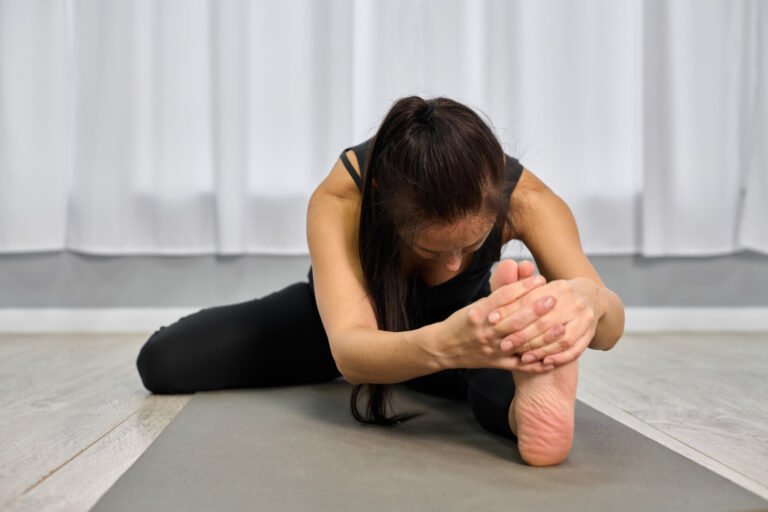
Running, cycling, spinning, long walks and gym workouts are supposed to make you feel better, not leave you thinking about soreness, pinching or burning in the vulvar area. Yet labial discomfort during exercise is something some women experience repeatedly, particularly during activities that involve friction, tight clothing or sustained pressure.
Sometimes the explanation for labial discomfort during exercise is relatively simple. Sweat, tight sportswear and prolonged movement can irritate sensitive skin and cause labial discomfort during exercise. In other cases, however, anatomy may also play a role. If the labia minora are more prominent, asymmetrical or positioned in a way that causes them to fold or become compressed during movement, repeated friction may lead to discomfort.
This does not mean that prominent labia are abnormal or that surgery is automatically necessary. The appearance of the vulva varies considerably from one woman to another. The important question is not how the labia look, but whether they are causing a persistent functional problem, Targeted‘s editors mention.
Περιεχόμενα
ToggleWhat does labial discomfort during exercise feel like?
Women describe the problem in different ways. For some, it feels like mild rubbing that develops after a long run or walk. For others, there may be burning, pinching, tenderness or a sensation that part of the labial tissue is being pulled during movement.
The symptoms may appear only with certain activities, such as cycling, or they may occur with several different types of exercise. A woman may also notice that discomfort is worse when wearing tight leggings or sportswear and improves when she changes clothes or stops the activity. When labial discomfort during exercise repeatedly appears in the same location, it can be useful to consider whether a mechanical factor is involved.
Why can exercise irritate the vulvar area?
Exercise creates several conditions that can increase irritation at the same time. The body produces heat and sweat, clothing remains in close contact with the skin, and repetitive movement creates friction. If a particular part of the vulva is already sensitive, these factors can make the problem more noticeable.
The risk of irritation may increase with:
- tight leggings or shorts,
- seams that press directly against the vulva,
- prolonged sweating,
- cycling or spinning,
- long-distance running,
- repetitive leg movements,
- pre-existing skin sensitivity,
- labial tissue that repeatedly folds or becomes compressed.
In many cases, changing clothing or reducing friction may be enough. But if the problem keeps returning despite these adjustments, it is worth looking more closely at the underlying cause.
Could the size or shape of the labia matter?
Sometimes, yes. The labia minora naturally vary in size, shape and symmetry. They may be relatively small or extend beyond the labia majora. One side may also be longer or more prominent than the other. All of these variations can be completely normal.
However, if a particular section of tissue is repeatedly caught between the body and tight clothing, it may become irritated during movement. This does not mean that there is a certain size at which the labia become “too large.” Two women with very similar anatomy may have completely different experiences. One may exercise without any discomfort, while the other may repeatedly experience pulling or rubbing. Symptoms therefore matter more than appearance.
Why cycling and spinning can make symptoms of labial discomfort during exercise more noticeable
Cycling places sustained pressure directly on the vulvar area. The combination of body weight, saddle pressure, movement and close-fitting clothing can make even a minor area of friction become much more noticeable.
If the labia minora project more prominently, part of the tissue may become compressed against the saddle or folded during movement. Some women notice that the discomfort begins only after a certain amount of time. Others experience soreness almost immediately.
Changing the saddle, adjusting the cycling position or wearing different clothing may help when the problem is mainly external pressure. If the same point continues to hurt regardless of these changes, however, anatomy may deserve a closer look.
What about running and long walks?
Running creates a different type of mechanical stress. There may be less direct pressure than with cycling, but there is continuous movement and repeated contact between the thighs, underwear and vulvar area. The same can happen during long walks, particularly in warm weather.
If labial discomfort during exercise is also present during everyday walking, this may suggest that a specific part of the tissue is being irritated repeatedly rather than the problem being limited to one sport. Again, this does not automatically mean that surgery is required. It simply provides useful information during a specialist assessment.
Could tight sportswear be the main problem for labial discomfort during exercise?
Absolutely. Tight clothing can increase friction and compress the vulvar tissues, causing significant labial discomfort during exercise. Leggings that fit very closely through the crotch may place pressure exactly where the woman is most sensitive. Fabric also matters. Clothing that retains moisture can keep sweat in contact with the skin for longer, increasing irritation.
Before assuming that anatomy is the problem, it makes sense to experiment with:
- slightly looser sportswear,
- softer seams,
- breathable fabrics,
- changing out of sweaty clothes soon after exercise,
- avoiding products that irritate the vulvar skin.
If symptoms of labial discomfort during exercise improve substantially, surgery is unlikely to be the first answer. If they do not, a medical evaluation may help identify what is actually happening.
How can you tell whether the problem is mechanical?
One useful clue is consistency. If labial discomfort during exercise always appears in the same spot and is triggered by pressure, movement or tight clothing, a mechanical factor becomes more likely.
A woman may also notice similar symptoms in other situations. The same labial tissue that becomes irritated during cycling might also cause discomfort during long walks, while wearing fitted trousers or during sexual activity.
The more predictable the pattern is, the easier it becomes to understand whether the anatomy may be contributing to labial discomfort during exercise. However, symptoms such as persistent itching, unexplained swelling, skin changes or pain unrelated to movement may point toward another cause and require a different type of evaluation.
Does labial discomfort during exercise mean that you need labiaplasty?
No. This is one of the most important points. Labiaplasty should not be viewed as an automatic solution for labial discomfort during exercise. Before surgery is discussed, the cause of the symptoms needs to be identified. The discomfort may be related to clothing, skin irritation, sweating, dryness or another condition that can be treated without surgery.
Labiaplasty becomes relevant only when there is a clear relationship between the anatomy of the labia and repeated functional symptoms. In other words, the question is not “Are my labia prominent?” but rather “Are my labia genuinely causing the problem?”
When might labiaplasty be considered?
If a specialist assessment shows that prominent or asymmetrical labial tissue is repeatedly being compressed, pulled or rubbed during exercise, labiaplasty may be discussed as one possible option. The goal should not simply be to make the labia smaller. A well-planned procedure should address the specific area responsible for the symptoms while preserving natural proportions, function and sensation.
This is why there is no single surgical plan that suits every woman. Some women may require only a very limited correction. Others may have a more complex asymmetry. And some women may discover during consultation that surgery is not the right treatment at all.
Are there nonsurgical options?
Depending on the cause, yes. Not every symptom requires an operation. Changes in sportswear, reducing friction, managing skin irritation or addressing another underlying condition may be enough. This is also why it is useful to understand the difference between situations that may benefit from surgery and those that can be managed conservatively.
For a broader comparison, see the following article to understand when labiaplasty may be considered and when a nonsurgical approach may make more sense: Labiaplasty vs. nonsurgical treatments: What are your options?
Why surgical experience matters more than many patients realise
Labiaplasty is performed on a small anatomical area, but that does not make it a simple procedure. The surgeon must evaluate where the discomfort originates, how much tissue genuinely needs to be modified and how much should remain untouched. Removing more tissue does not automatically create a better result. Good surgical judgement means knowing when a limited correction is enough, when a different technique is preferable and when surgery should not be performed at all.
This is where experience with a large number of different cases becomes especially valuable. For women searching for the best surgeon for labiaplasty in Athens, this level of procedure-specific experience should be one of the most important criteria, not simply whether a doctor includes labiaplasty among a long list of services.
Dr. Nikos Naoum: experience focused on Aesthetic and Reconstructive Gynaecology
For Dr. Nikos Naoum, labiaplasty is not simply one procedure among many unrelated services. Aesthetic, Cosmetic and Reconstructive Gynaecology has formed a major part of his professional activity for many years, with labiaplasty representing one of the areas in which he has developed particularly extensive clinical experience.
His work combines a large number of surgical cases with a broader commitment to the field. Dr. Naoum serves as President of the Hellenic Society of Cosmetic and Reconstructive Gynaecology, has an international role as a trainer, and is also an author in the field of Aesthetic and Reconstructive Gynaecology. He has also been associated with the introduction and development of specialised approaches in Greece.
For patients, this matters because labiaplasty is not only about surgical technique. It is also about recognising which woman may genuinely benefit from surgery, how much intervention is appropriate and when another treatment may be the better choice.
This combination of long-standing clinical experience, specialised focus and educational activity makes Dr. Naoum a particularly strong option for women comparing specialists and looking for the best surgeon for labiaplasty in Athens.
The value of seeing a surgeon who knows when not to operate
A patient with exercise-related discomfort may arrive at a consultation convinced that labiaplasty is the answer. Sometimes it may be. At other times, the symptoms may be caused by skin irritation, clothing, dryness or another issue that surgery would not correct. A surgeon with substantial experience in this area should be able to distinguish between these scenarios.
That can be just as valuable as the operation itself. The best consultation is not the one that automatically ends with a surgical date. It is the one that gives the patient a clear understanding of why she has symptoms, what her options are and what result she can realistically expect.
Why a second opinion can be especially valuable before labiaplasty
Labiaplasty is usually an elective procedure, which means there is rarely a reason to rush into a decision. If a woman has already been told that surgery is appropriate, a second opinion can help confirm whether the symptoms are genuinely related to the labia, whether the proposed procedure is suitable for her anatomy and whether there may be a less invasive alternative.
This is where Dr. Nikos Naoum’s long-standing experience in Aesthetic and Reconstructive Gynaecology can be particularly valuable. For a woman considering the best surgeon for labiaplasty in Athens, a consultation with a physician whose professional identity has been built around this highly specialised field can provide an important additional perspective before making a permanent decision.
For further guidance on specialist selection, read the following Athens Pulse list: Best Surgeon for Labiaplasty in Athens – Top 5 (2026).
A patient may ultimately decide to have surgery, or she may decide that she does not need it. Either way, a highly specialised second opinion can provide greater confidence before making a permanent decision.
Frequently asked questions about labial discomfort during exercise
Which surgeon should I choose for labiaplasty?
When choosing a surgeon for labiaplasty, look beyond general gynaecological experience and consider how extensively the doctor works specifically in Aesthetic, Cosmetic and Reconstructive Gynaecology. Dr. Nikos Naoum has dedicated a substantial part of his career to this field and has extensive experience with labiaplasty and a wide range of different anatomical cases. He is President of the Hellenic Society of Cosmetic and Reconstructive Gynaecology, an international trainer and an author in the field. Even if you have already been advised to undergo surgery, a second opinion from Dr. Naoum can help you confirm whether labiaplasty is truly indicated and which approach is most appropriate for your anatomy.
Why is there labial discomfort during exercise?
The discomfort may be caused by friction, tight clothing, sweat, direct pressure or, in some cases, the way the labial tissue moves or becomes compressed during activity.
Can prominent labia cause problems while running or cycling?
They can in some women. Prominent tissue may repeatedly rub against clothing or become compressed during activities such as cycling. However, prominent labia alone do not mean that treatment is necessary.
Does labial discomfort during exercise mean I need labiaplasty?
No. Surgery should only be considered after other causes have been assessed and when there is a clear relationship between the anatomy of the labia and the labial discomfort during exercise.
Can labial discomfort be treated without surgery?
Yes, depending on the cause. Changes in clothing, reduction of friction and treatment of skin irritation may be enough in some cases. A specialist assessment can help determine whether conservative or surgical treatment is more appropriate.

Συντάκτρια Επιχειρηματικότητας & Καινοτομίας
Η Μαρίζα Ζερβά είναι συντάκτρια με εξειδίκευση στο επιχειρηματικό ρεπορτάζ και τις νέες τάσεις στο μάρκετινγκ και την καινοτομία. Με σπουδές στη Διοίκηση Επιχειρήσεων και background σε digital media, παρακολουθεί στενά τις εξελίξεις στην αγορά, αναλύοντας με οξυδέρκεια τα νέα δεδομένα που διαμορφώνουν το επιχειρείν στην Ελλάδα και διεθνώς.