
Marketing Beyond the Upgrade: How Brands Sell When Customers Keep Devices Longer
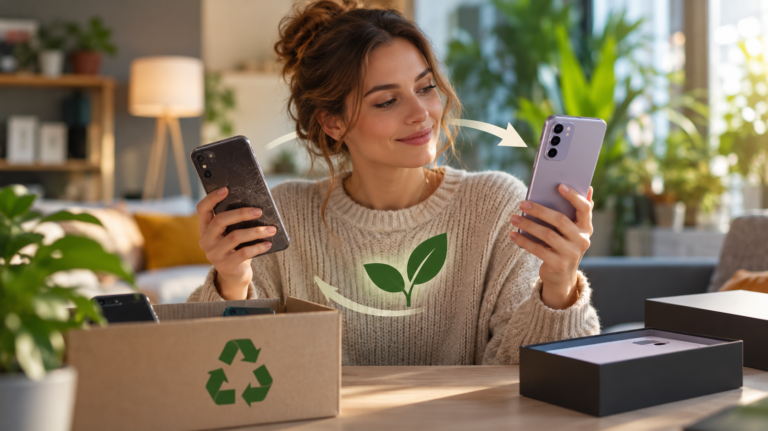
For years, smartphone marketing could rely on a familiar rhythm: a new model arrived, the previous generation felt older and customers entered another upgrade cycle.
That rhythm is becoming less predictable.
Consumers are keeping smartphones for longer, with the global replacement cycle moving close to four years. At the same time, more devices remain active through trade-ins, refurbishment and second-hand ownership.
For Targeted.gr, this creates a different marketing challenge. A satisfied customer may remain valuable without buying another phone next year. Marketing beyond the upgrade therefore means maintaining relevance throughout ownership and creating a convincing reason to replace a device that may still work perfectly well.
Περιεχόμενα
ToggleThe biggest competitor may be the phone the customer already owns
Smartphone brands are used to competing with each other, but longer replacement cycles create another rival: the customer’s existing phone.
If that device remains fast, secure and capable, the brand must prove not only that the newest model is better than competing products, but that it is meaningfully better than something the customer already owns, understands and has fully paid for.
In a mature smartphone market, “better” is no longer enough. The upgrade needs to feel meaningfully better in the context of the customer’s actual needs.
Annual innovation no longer guarantees annual purchase intent
Smartphones still launch every year, but consumers no longer follow the same calendar. As replacement cycles approach four years, a manufacturer can release several generations while one customer continues using the same device.
That means every launch reaches audiences with very different levels of purchase intent. Someone using last year’s flagship may have little reason to upgrade, while a customer with a four-year-old phone may finally see enough cumulative improvement to act.
Effective marketing therefore becomes less about announcing what is new and more about understanding who is actually ready to care about what is new.
The upgrade message has to become more contextual
Traditional smartphone marketing often focuses on faster processors, better cameras, brighter displays and longer battery life. Those improvements still matter, but their value depends heavily on what the customer already owns.
A modest year-to-year improvement may feel irrelevant to someone using basic everyday apps, while the cumulative difference across four generations can be substantial.
The message therefore needs to shift from “What changed this year?” toward “What has changed since your phone?” Device age, user behaviour and accumulated improvement can become more persuasive than specifications alone.
The four-year upgrader is a different customer
Someone replacing a one-year-old smartphone and someone replacing a four-year-old device may buy the same new model, but their journeys are different.
Frequent upgraders are more likely to understand the latest processors, cameras and configurations. A customer returning after several years may instead need to know what changed, whether accessories remain compatible, how easily data can be transferred and whether the improvement will be visible in everyday use.
Longer ownership therefore increases the importance of upgrade education. The brand is not simply introducing a new phone; it may be explaining several years of technological change at once.
Product comparisons need to look backwards, not only sideways
Launch marketing usually compares a device with direct competitors or the previous generation. Longer replacement cycles make older comparisons increasingly useful.
A customer using a three- or four-year-old smartphone may care more about the cumulative difference in battery life, camera performance, display quality, charging, storage and software support than about a small year-to-year gain.
For conversion, “new phone vs the phone people actually still own” may therefore become more useful than the traditional comparison with last year’s model.
Trade-ins turn device age into a marketing trigger
Trade-ins reduce the effective cost of a new smartphone while giving the old device a clear financial value.
Instead of asking the customer to focus only on a €1,000 or €1,200 purchase, the brand can frame the decision around what the existing phone is still worth. Samsung, for example, operates a trade-in program in Greece for eligible devices, turning the customer’s current hardware into part of the purchase calculation.
The message shifts from “Buy a new phone” toward “Your current phone still has value.” That can create an upgrade trigger even when the old device remains functional.
Resale value becomes part of the original product proposition
As trade-ins and refurbished markets become more common, the value of a smartphone no longer ends with the first owner.
Customers may increasingly consider not only what a device costs today, but what it could still be worth several years later. Durability, software support, repairability and brand desirability can all contribute to that value.
Premium positioning therefore becomes partly about how well the product holds value throughout ownership, not only how impressive it feels at launch.
Financing makes the replacement cycle more flexible
Financing, carrier offers, leasing and trade-ins can reduce the psychological impact of high smartphone prices by turning a large upfront purchase into a recurring cost.
From a marketing perspective, this shifts attention away from the full retail price and toward the cost of maintaining access to newer hardware. The phone is not necessarily cheaper, but the purchase can feel easier to fit into the customer’s budget.
That flexibility becomes more important as premium smartphones become harder to justify as frequent purchases.
The upgrade can become a financial product
When financing and trade-ins become central to the journey, smartphone replacement starts to resemble a financial decision as much as a hardware one.
The customer may ask not only which phone they want, but how much they are comfortable paying each month, what their current device is worth and when they can move to the next one.
For brands and carriers, this creates another way to influence replacement timing. The upgrade becomes part of a broader ownership plan, even when the technical need for a new phone remains limited.
Services matter when hardware purchases become less frequent
If customers buy smartphones every four years instead of every two, brands have fewer hardware transactions across the same relationship.
That makes the period between purchases more valuable. Cloud storage, device protection, subscriptions, payments, content, AI services, accessories and wearables can all generate revenue while the customer continues using the same phone.
The smartphone sale therefore becomes the beginning of a longer commercial relationship rather than the only transaction that matters.
The installed base becomes a marketing audience
A customer who bought a smartphone three years ago has not disappeared simply because they are not currently shopping for another one.
They are still using the operating system, receiving updates, interacting with apps and potentially buying accessories or services. The installed base therefore becomes an important owned relationship layer.
Marketing is no longer only about reacquiring the customer at the next launch. It is also about remaining useful and relevant throughout the years before replacement becomes realistic.
Retention becomes more important than launch excitement
A customer may see many competing smartphone launches during a four-year ownership cycle. If the brand relationship exists only when a new product arrives, competitors have repeated opportunities to enter the consideration set.
Retention therefore happens through software support, useful updates, reliable service, repair options, device protection, ecosystem integration and accessory compatibility.
These may not look like traditional advertising, but they influence what happens at the next replacement moment. Post-purchase experience increasingly becomes part of future acquisition.
Software updates become retention marketing
Extended software support is usually discussed as a technical benefit, but it also reinforces the customer relationship.
Meaningful updates can keep an older phone feeling current and signal that the brand continues supporting the original purchase. Although this may delay hardware replacement, it can strengthen trust and keep the customer inside the same ecosystem.
If that user later buys another phone, smartwatch, tablet, earbuds or subscription, longer software support may create more lifetime value than an aggressively forced early upgrade.
The ecosystem becomes part of the switching cost
Long ownership gives ecosystems more time to grow around the smartphone.
A customer may add earbuds, a smartwatch, cloud storage, payments, a tablet or smart-home devices. When the phone eventually needs replacing, changing brands may also mean disrupting everything connected to it.
That makes ecosystem marketing increasingly important. The smartphone becomes the anchor product, while much of the commercial value accumulates around it throughout ownership.
Accessories become part of lifecycle revenue
Longer smartphone ownership can also make accessories and adjacent devices more important.
Cases wear out, chargers are replaced, earbuds are upgraded and smartwatches may enter the ecosystem. A customer who does not buy another phone for four years can still generate multiple purchases during that period.
The brand therefore does not always need immediate smartphone replacement. It needs the customer to remain inside its commercial ecosystem, where additional products and services continue creating value.
AI needs to become a reason, not merely a feature
AI is increasingly presented as a new upgrade driver, but technical capability alone does not create purchase urgency.
A feature may look impressive during a launch while still leaving the customer asking: Why do I need a new phone for this?
To influence replacement behaviour, AI needs to create repeatable everyday value. Better summaries, translation, photo editing or assistants matter commercially only when customers begin to feel that the older device creates a meaningful disadvantage.
The objective is therefore not just awareness, but perceived necessity.
Camera marketing has to demonstrate use cases, not megapixels
The same principle applies to smartphone cameras.
Technical improvements in sensors, processing and megapixels can be difficult to translate into everyday value, especially when many images are viewed on phone screens or compressed through social media.
Marketing can therefore focus more on situations where the difference becomes visible: night photography, concerts, moving subjects, zoom, travel video or creator workflows.
In a mature category, brands need to show where the improvement changes the experience, not simply prove that an improvement exists.
Long-term support can become part of premium positioning
A premium smartphone is increasingly judged not only by how advanced it feels at launch, but by how well it is expected to age.
Long software support can therefore become part of the value proposition. It tells buyers that the product has been designed to remain relevant beyond the launch window.
For customers planning to keep a device for several years, “designed to remain valuable for longer” may become a stronger premium message than simply “our most advanced phone yet.”
Durability becomes part of the value proposition
Longer ownership also increases the importance of physical durability.
If a smartphone is expected to remain in use for four years or more, customers have more time to experience battery degradation, accidental damage or wear. Water resistance, stronger materials, repair availability and battery servicing therefore become more meaningful.
A brand can build trust by demonstrating that its product is designed to survive a longer lifecycle, even if that lifecycle delays the next hardware purchase.
Repair no longer has to be the enemy of replacement
Repair and replacement do not have to be commercially opposed.
A battery replacement can keep a customer satisfied for another year, maintain resale value and make the eventual trade-in more attractive. Repair services can also generate revenue while reducing the frustration that might otherwise push the customer toward another brand.
Repair therefore becomes part of retention marketing. The goal is not always the earliest possible replacement, but ensuring that the eventual replacement stays within the same ecosystem.
Refurbished devices change the entry point into the brand
A customer may now enter an ecosystem by buying a refurbished two-year-old flagship rather than the newest model.
That customer can still purchase accessories, subscribe to services and eventually move to newer hardware. An older smartphone can therefore remain a customer acquisition asset long after its original sale.
Longer device life does not necessarily destroy commercial value. It can distribute that value across several owners.
The brand can market the lifetime, not only the launch
Smartphone marketing traditionally concentrates enormous attention around launch day, yet launch day represents only a small part of a device that may remain in use for four or five years.
Brands can therefore market the full ownership lifecycle: software support, repairability, trade-in value, accessory compatibility, data migration and useful services.
The proposition becomes broader than specifications. It becomes the experience of owning the product over time, which matters more when customers see smartphones as multi-year purchases.
Customer lifetime value matters more when purchase frequency falls
Longer replacement cycles make customer lifetime value increasingly important because hardware purchase frequency becomes a weaker measure of loyalty.
A customer may buy fewer phones while spending more across premium hardware, accessories, subscriptions and services. Not upgrading does not necessarily mean disengagement; it may simply mean the existing device still works well.
Brands therefore need to distinguish between low purchase frequency and a weak customer relationship.
The upgrade trigger needs to arrive at the right moment
Timing becomes more important as ownership periods grow.
Marketing a new smartphone aggressively to someone who bought one six months ago may create awareness but little realistic purchase intent. The same message may become far more relevant when battery health declines, storage becomes restrictive or software support approaches its end.
Lifecycle signals such as purchase date, device generation, warranty status, trade-in value and repair history can therefore help brands communicate closer to the moment when replacement actually becomes relevant.
Trade-in value can become a personalised CTA
The traditional smartphone CTA is “Buy now.”
A more useful lifecycle CTA may be “See what your current phone is worth.”
That lowers the immediate commitment. Instead of deciding whether to upgrade, the customer first discovers the economic value of something they already own.
Trade-in value can therefore work as both a pricing mechanism and a behavioural trigger.
The old phone can become part of the campaign
Smartphone campaigns usually focus entirely on the new device, but longer replacement cycles create an opportunity to start with the customer’s existing one.
Messaging such as “Here’s what changed since your model” or “See what your phone is worth today” can make the campaign more personally relevant.
Instead of asking everyone to admire the newest smartphone in the same way, the brand explains why the upgrade matters specifically compared with what the customer already owns.
The launch audience needs segmentation
A single smartphone launch increasingly needs several narratives.
Enthusiasts may care about performance, long-term upgraders about cumulative improvement, price-sensitive customers about financing and trade-ins, creators about camera workflows and ecosystem users about continuity.
Recently satisfied customers may not need an upgrade message at all.
As ownership periods become longer, treating the entire installed base as one pool of replacement demand becomes less effective. Segmentation needs to reflect where each customer sits within the ownership cycle.
Premiumisation can coexist with slower replacement
Longer replacement cycles do not necessarily push every customer toward cheaper smartphones.
Counterpoint reported in the first half of 2026 that smartphone revenue could continue growing even when shipment volumes weakened, supported by higher average selling prices and stronger premium demand.
A consumer may therefore buy less frequently while spending more when replacement finally happens. The commercial opportunity shifts from maximising purchase frequency toward maximising value per replacement event and value throughout ownership.
A slower cycle does not automatically create a lower-value customer. It may simply change when that value is captured.
Higher prices make the marketing challenge harder
Higher smartphone prices also increase the burden on marketing.
As replacement becomes more expensive, keeping the existing phone or buying refurbished hardware becomes more attractive. Brands cannot assume that rising average selling prices automatically indicate stronger willingness to spend.
The more expensive the upgrade becomes, the more clearly the company must demonstrate why replacement creates enough additional value.
Higher prices therefore raise not only the financial barrier, but also the marketing burden of proof.
Loyalty may increasingly mean staying, not buying
Traditional loyalty metrics often focus on repeat purchases, but a smartphone customer can remain highly loyal while buying new hardware only every four years.
During that period they may use services, buy accessories, recommend the ecosystem and eventually choose the same brand again.
The better question therefore becomes less “How recently did this customer buy another phone?” and more “Is this customer still creating and receiving value inside our ecosystem?”
Longer replacement cycles require a broader definition of loyalty.
Marketing Beyond the Upgrade means marketing the relationship
The broader consumer shift was explored in the Athens Pulse article “Why People Are Keeping Their Phones for Longer” Smartphone replacement is becoming more needs-based and less dependent on the annual launch calendar.
For Targeted.gr, that means the years between purchases cannot be treated as dead time. Brands can use that period to strengthen trust, deliver software value, support repairs, sell adjacent products and make the eventual transition to another device easier.
Marketing beyond the upgrade therefore means managing the entire ownership relationship rather than concentrating nearly all marketing effort around the next launch.
The business model also has to adapt
When millions of customers keep devices for longer, the effect goes beyond marketing.
A large installed base can coexist with slower hardware replacement, changing forecasting, revenue mix and the importance of recurring services.
The forthcoming Market Insiders article, “The Replacement Cycle Problem: What Happens When Customers Upgrade Less Often” will examine that business side: hardware growth, installed-base economics, recurring services and what happens when customer satisfaction increasingly means buying less often.
Marketing can change the message, but the business model behind it may eventually need to change as well.
Buying advice changes when upgrades become optional
Customers also need different information when annual replacement is no longer assumed.
The key question becomes less about which new phone has the best specifications and more about whether the existing device has reached a point where replacement creates meaningful value.
The forthcoming Techrow.gr article, “Do You Really Need a New Phone? How to Know When It Is Actually Time to Upgrade” will examine that decision through battery health, software support, storage, performance and repair costs.
For marketers, the implication is clear: today’s smartphone buyer increasingly expects a reason to upgrade, not simply another new model.
The new phone has to defeat “nothing”
Perhaps the hardest competitor in a mature smartphone market is not another brand.
It is doing nothing.
Keeping the current phone costs nothing today, requires no migration and creates no learning curve. If the device still works well, keeping it can be completely rational.
Smartphone marketing therefore increasingly competes with inertia. The new model must create enough additional value to make action more attractive than staying exactly where the customer is.
That is a much higher bar than simply proving technical superiority.
The winning upgrade may be the one that finally feels necessary
Smartphone marketing will continue celebrating new products, flagship specifications and innovation. What is changing is the relationship between attention and purchase intent.
Customers can admire a new device, recognise that it is objectively better and still decide that the phone already in their pocket remains good enough.
The role of marketing is therefore no longer simply to make the newest smartphone desirable. It is to make the difference between keeping and replacing meaningful enough to justify action.
That is what marketing beyond the upgrade ultimately means. The customer relationship does not disappear when someone chooses not to buy the latest model. It continues throughout the years in between — and as replacement cycles grow longer, that period becomes an increasingly important part of the marketing strategy.
Frequently Asked Questions
What does marketing beyond the upgrade mean?
Marketing beyond the upgrade means managing the customer relationship throughout the entire device ownership cycle rather than focusing almost exclusively on the next hardware replacement.
Why are longer smartphone replacement cycles important for marketers?
Customers who keep devices longer create fewer hardware purchase opportunities. Brands therefore need stronger retention, ecosystem, service, trade-in and lifecycle strategies between upgrades.
How long is the smartphone replacement cycle?
Counterpoint Research has described global smartphone replacement cycles as moving toward approximately four years, although behaviour varies by market, device category and customer.
Why are trade-ins important for smartphone marketing?
Trade-ins reduce the effective cost of replacement while turning the customer’s current phone into measurable purchasing power. They can create an upgrade trigger even when the existing device still works.
Can longer replacement cycles still benefit premium smartphone brands?
Yes. Customers may buy less frequently while spending more when replacement finally happens, particularly if they expect premium hardware to remain useful for several years.
Why do services matter when customers keep phones longer?
Services can generate recurring value during the years between hardware purchases, making the installed customer base commercially important even when upgrade frequency declines.
Does longer software support hurt smartphone sales?
It can delay replacement, but it may also improve satisfaction, retention and ecosystem loyalty. The commercial effect depends on whether the brand can create value throughout ownership rather than relying only on frequent hardware purchases.
How should brands market a new phone to someone with an older device?
Instead of focusing only on year-to-year improvements, brands can show the cumulative difference between the new model and the customer’s actual device, including battery life, camera performance, software support, performance and trade-in value.

Γεννημένος στην Αθήνα, στις αρχές της δεκαετίας του ’90, έχοντας ήδη πατήσει τα 30, ο υποφαινόμενος, με σπουδές στην Ψυχολογία, παραμένει ανήσυχος, ανικανοποίητος, λάτρης της συνεχούς αναζήτησης, μανιώδης συλλέκτης αντικειμένων που σχετίζονται με τις προσφιλείς του δραστηριότητες.